
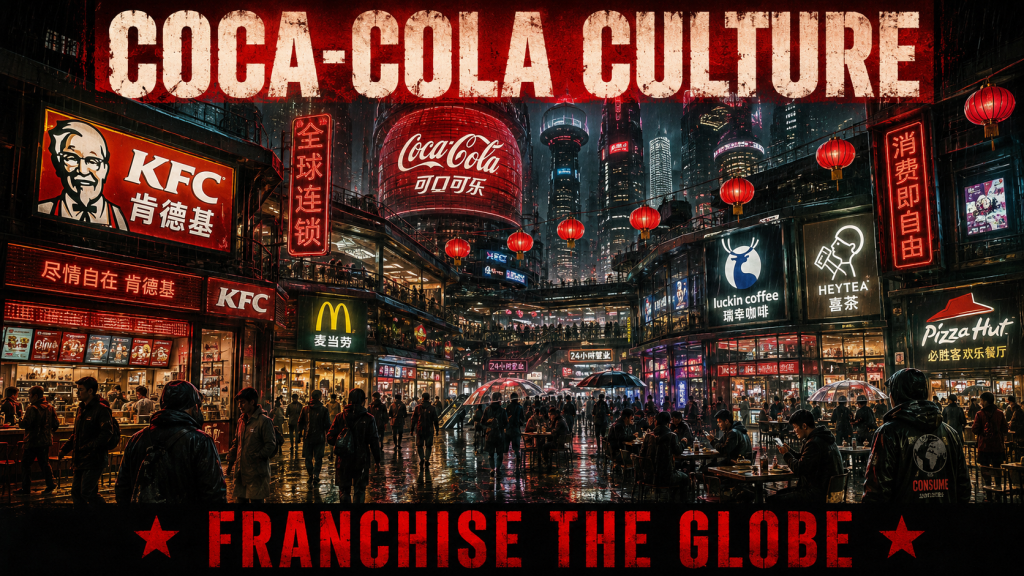
American Franchises and the Globalization of Daily Life: Media, Politics, and the Expansion of Consumer Culture
Abstract
The expansion of American franchises across the globe represents one of the most significant cultural and economic developments of the modern era. From fast food chains and entertainment conglomerates to digital media platforms and sports leagues, American brands have become deeply embedded in everyday life worldwide. This paper examines how franchising evolved into a dominant economic model and how American culture—often symbolized through “Coca-Cola culture”—extended its influence through radio, television, cinema, music, sports, and the internet. It also explores the transformation of modern politics, particularly in the United States, into a media-centered spectacle increasingly driven by performance, emotional narratives, and entertainment logic. The paper argues that globalization, technological innovation, media expansion, and the psychological familiarity of branding enabled American franchises to dominate global consumer markets while simultaneously reshaping political communication and public discourse. Finally, the study evaluates the economic growth potential of franchising and estimates future expansion trends within global franchise markets.
Introduction
The twentieth and twenty-first centuries witnessed the rise of the United States as not only a military and economic superpower, but also as the world’s most influential exporter of culture. American franchises became symbols of modernity, convenience, entertainment, and aspirational consumerism. The spread of multinational corporations such as The Coca-Cola Company, McDonald’s, Disney, and Netflix illustrates how American capitalism merged with media systems to create a globally recognizable lifestyle.
This expansion was not merely economic. It transformed social behaviors, political communication, cultural identity, and even the structure of public imagination. American culture became associated with entertainment, celebrity influence, branding, and emotional storytelling. Through the global reach of television networks, Hollywood films, music industries, sports broadcasting, and digital media platforms, the United States exported not only products but also values, attitudes, and narratives.
Franchising emerged as one of the most effective systems for reproducing business success on a global scale. The franchise model allowed companies to rapidly replicate standardized experiences while minimizing operational risk. Simultaneously, the rise of media-driven politics transformed political figures into performers operating within a spectacle economy where visibility, charisma, and emotional appeal often outweighed policy depth.
This paper investigates the relationship between American franchising, global media culture, and the theatrical transformation of politics in the modern age.
The Rise of “Coca-Cola Culture”
The term “Coca-Cola culture” refers to the global spread of American consumer values and lifestyles through corporate branding and mass media. During the Cold War, products like Coca-Cola symbolized Western capitalism, freedom of consumption, and modernity. Over time, American consumer culture expanded beyond products into a complete cultural ecosystem.
The globalization of American culture occurred through several interconnected forces:
- Mass media expansion
- Technological innovation
- Economic globalization
- English-language dominance
- Entertainment industries
- Digital communication networks
Hollywood became one of the most influential cultural exporters in history. American films introduced audiences worldwide to American ideals, family structures, lifestyles, fashion trends, and political narratives. Television further intensified this process by creating recurring exposure to American cultural norms through sitcoms, dramas, reality shows, and news broadcasting.
Music industries amplified this influence. Genres such as jazz, rock, hip-hop, country, and pop became global phenomena. Artists from the United States shaped youth culture and social movements internationally. Sports franchises also contributed significantly. Organizations such as National Basketball Association and National Football League evolved into entertainment empires with global audiences.
The rise of the World Wide Web accelerated this cultural diffusion dramatically. American technology companies became gatekeepers of global communication. Platforms such as Google, Meta Platforms, YouTube, and Amazon transformed commerce, communication, and entertainment into interconnected global systems.
As a result, American franchises became integrated into the routines of billions of people worldwide.
Franchising as a Dominant Economic Model
Franchising became popular because it combines centralized branding with decentralized ownership. The system benefits both corporations and local entrepreneurs.
A franchise allows individuals to operate under an established brand while following standardized operational guidelines. This creates several advantages:
Advantages for Franchisors
- Rapid expansion with lower capital risk
- Increased market penetration
- Brand consistency across locations
- Shared operational costs
Advantages for Franchisees
- Reduced startup uncertainty
- Established consumer trust
- Marketing support
- Operational training
- Access to proven business systems
Consumers gravitate toward franchises because they offer predictability. Whether in New York, Amsterdam, Tokyo, or Johannesburg, customers expect similar experiences from globally recognized brands.
This predictability creates psychological comfort in increasingly globalized societies. In uncertain economic environments, consumers often prefer familiar brands over unknown alternatives.
The Media Spectacle and Political Theater
One of the most significant developments in modern society is the transformation of politics into a form of entertainment. The American political landscape increasingly resembles a media-driven drama where politicians function as performers competing for attention in a crowded information economy.
Television fundamentally altered politics during the twentieth century. Political debates became visual performances judged not only by ideas but by charisma, confidence, appearance, and emotional impact. The emergence of social media intensified this trend.
Modern politicians are now evaluated through metrics similar to entertainers:
- Audience engagement
- Media visibility
- Emotional storytelling
- Viral moments
- Public performance skills
The political arena increasingly rewards individuals capable of commanding media attention rather than those solely possessing administrative expertise.
This phenomenon reflects broader societal changes associated with the “attention economy.” News organizations compete for ratings, clicks, and engagement. Dramatic political conflict generates stronger emotional reactions and therefore attracts larger audiences.
As a result, political discourse often becomes polarized and theatrical.
Drama, Media Backlash, and Public Reaction
Political drama generates both positive and negative social responses. Emotional narratives can mobilize public participation and increase political awareness. However, constant sensationalism may also produce social fatigue, distrust, and polarization.
Negative Consequences
- Declining trust in institutions
- Increased political tribalism
- Emotional manipulation
- Misinformation amplification
- Reduced policy-focused discussion
News cycles driven by outrage frequently prioritize controversy over complexity. Social media algorithms reward emotionally charged content because it increases user engagement. Consequently, political actors often adopt increasingly dramatic communication strategies.
Positive Consequences
Despite these concerns, media-driven politics also creates certain democratic advantages:
- Greater public participation
- Increased political visibility
- Faster dissemination of information
- Expanded access to political discourse
- Greater accountability through public scrutiny
Political spectacle can energize previously disengaged populations. Citizens now participate in political discussions continuously through digital platforms rather than only during elections.
Nevertheless, the blending of entertainment and governance raises important questions about the future of democratic institutions.
American Franchises and Soft Power
The global success of American franchises demonstrates the effectiveness of “soft power,” a concept describing the ability of nations to influence others through culture and attraction rather than force.
American franchises export more than products; they export experiences and symbolic meanings. Fast food represents convenience and speed. Streaming services represent personalization and limitless entertainment. Technology companies represent innovation and connectivity.
This cultural influence affects:
- Consumer habits
- Language adoption
- Fashion trends
- Food preferences
- Social expectations
- Political communication styles
Even anti-American sentiment often exists alongside the consumption of American products and media. This paradox reflects the complexity of globalization.
The Economic Scale of Franchising
Franchising has become one of the largest sectors of the global economy.
Estimated Global Franchise Statistics
As of the mid-2020s:
- There are an estimated 4–5 million franchise establishments globally.
- The global franchise industry is estimated to generate over $4 trillion annually in economic activity.
- The United States alone contains approximately 800,000 franchise establishments.
- Franchise businesses employ tens of millions of workers worldwide.
Future Growth Projections
Current economic trends suggest continued franchise expansion due to:
- Urbanization
- Digital commerce integration
- Middle-class growth in emerging markets
- Consumer preference for recognizable brands
- Expansion into developing economies
Industry analysts estimate that the global franchise market could exceed $6–7 trillion in economic value by the mid-2030s if current growth trajectories continue.
Potential future areas of franchise growth include:
- Digital education franchises
- Health and wellness services
- Artificial intelligence support services
- E-commerce logistics
- Sustainable food systems
- Virtual entertainment franchises
The franchise model remains attractive because it balances entrepreneurship with institutional support.
The Role of the Internet and Digital Platforms
The internet transformed franchises from physical operations into digital ecosystems. Streaming platforms, online retail systems, food delivery applications, and social media marketing created new forms of global franchising.
Digital platforms now shape consumer consciousness continuously through algorithms, advertising, and recommendation systems. American companies dominate many of these infrastructures.
The internet accelerated cultural synchronization. Global audiences now consume similar films, songs, memes, and news events simultaneously. This contributes to the emergence of a globally interconnected media environment heavily influenced by American cultural production.
Criticism of Global Franchise Expansion
Despite their success, American franchises face significant criticism.
Cultural Critiques
Critics argue that global franchising contributes to cultural homogenization. Local traditions, cuisines, and businesses may struggle to compete with multinational corporations possessing vast financial and marketing power.
Economic Critiques
Opponents claim franchising can concentrate wealth within large corporations while limiting local economic independence.
Political Critiques
Media monopolization and corporate influence raise concerns about democracy, public discourse, and consumer manipulation.
The expansion of digital media also increases concerns regarding surveillance capitalism, misinformation, and psychological dependency on entertainment systems.
Conclusion
The rise of American franchises reflects the intersection of capitalism, media technology, globalization, and cultural influence. Through radio, television, film, music, sports, and digital communication networks, the United States constructed an unprecedented global cultural presence.
Franchising succeeded because it offers familiarity, scalability, and reduced risk in increasingly interconnected markets. At the same time, media-driven political culture transformed governance into a performance-oriented spectacle shaped by emotional narratives and audience engagement.
The modern world increasingly operates according to the logic of visibility, branding, and entertainment. Political leaders compete for attention much like celebrities, while corporations shape cultural habits through global media ecosystems.
The future of franchising appears economically strong, with trillions of dollars in projected growth and continued expansion into digital sectors. However, societies must also confront the ethical, cultural, and political consequences of a world increasingly organized around commercial spectacle and media influence.
Ultimately, the globalization of American franchises demonstrates that modern power is no longer exercised solely through governments or military force. It is exercised through culture, storytelling, branding, technology, and the ability to shape everyday life itself.
[…] 14, 2026 admin Thursday 14th of may 2026: Franchise the globe A young woman codes intently in a cozy, music-filled room on a rainy night Shit Talk! Big boy […]