The Sacrament: Sacred Plants, Ritual Use, and the Rastafarian Understanding of Cannabis
Abstract
Throughout human history, sacramental substances have played a central role in religious practice, healing traditions, and spiritual experience. Across cultures, plants and natural compounds have been regarded as gifts from the divine, capable of expanding consciousness, aiding meditation, promoting healing, and connecting individuals to spiritual realities. One of the most debated sacramental substances in modern history is cannabis, particularly within the tradition of Rastafari. Rastafarians consider marijuana, often referred to as “ganja,” a holy herb given by God for wisdom, meditation, peace, and communal reasoning. In recent decades, scientific research has increasingly examined cannabis and its chemical compounds for medical use, leading to the development of treatments that preserve therapeutic properties while reducing psychoactive effects. This paper explores the historical role of sacraments, the Rastafarian theology of cannabis, and the evolving scientific understanding of medicinal cannabinoids.
Introduction
The term “sacrament” traditionally refers to a sacred act, object, or substance used to connect humanity with the divine. In many religious traditions, sacramental substances are viewed as instruments of spiritual insight, healing, purification, or revelation. Ancient civilizations often employed herbs, wine, incense, mushrooms, and other naturally occurring substances in ceremonies designed to transcend ordinary consciousness and cultivate spiritual awareness.
The use of cannabis as a sacrament became internationally recognized through the emergence of the Rastafarian movement in Jamaica during the 1930s. Rastafarians interpret cannabis as a sacred plant referenced indirectly within biblical scripture and used to encourage meditation, reasoning sessions, creativity, peace, and spiritual unity. While cannabis has long been controversial in legal and political discourse, modern medicine has increasingly acknowledged its therapeutic potential. Researchers now study cannabinoids such as CBD (cannabidiol), which may provide medicinal benefits without the intoxicating effects commonly associated with THC (tetrahydrocannabinol).
This paper examines the broader history of sacramental substances, the spiritual significance of cannabis in Rastafarian belief, and the intersection between religious practice and modern medical science.
Sacraments Throughout History
Sacred substances have existed in nearly every known civilization. In ancient Egypt, priests used incense and aromatic herbs during temple rituals. In ancient Greece, initiates of the Eleusinian Mysteries consumed ritual beverages believed to induce spiritual visions. Indigenous cultures throughout the Americas used peyote, ayahuasca, and tobacco ceremonially to communicate with spiritual forces and seek healing.
Within Christianity, wine became a sacrament symbolizing the blood of Christ during the Eucharist. In Hindu traditions, the ritual drink soma was described in the Vedas as a divine substance capable of inspiring wisdom and immortality. Similarly, many African spiritual traditions employed herbs and plants believed to contain sacred energies.
These practices reveal a recurring historical theme: natural substances were frequently understood not merely as physical materials but as bridges between humanity and the sacred world.
Cannabis in Rastafarian Theology
Rastafari emerged in Jamaica during the early twentieth century, influenced by African spirituality, biblical interpretation, anti-colonial thought, and the coronation of Haile Selassie I in 1930. Rastafarians regard cannabis as a holy sacrament that assists believers in meditation, communal reasoning, and spiritual reflection.
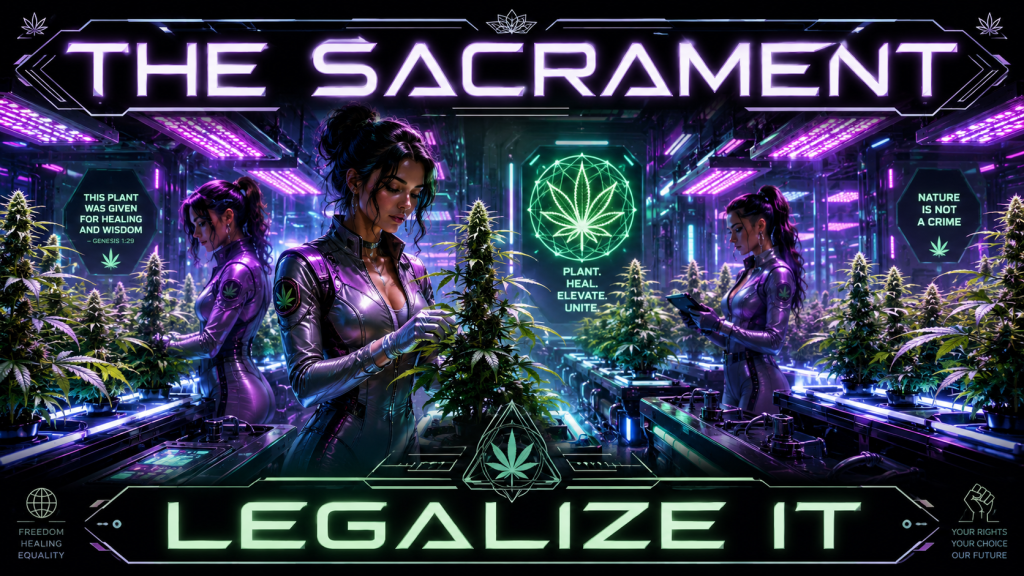
Rastafarian interpretations often reference biblical passages such as Genesis 1:29:
“Behold, I have given you every herb bearing seed, which is upon the face of all the earth.”
To many Rastafarians, this verse supports the belief that herbs were divinely created for human use and healing. Cannabis smoking within Rastafarian practice is not solely recreational; it is frequently ceremonial and communal. The herb is believed to calm the mind, deepen reasoning, and encourage spiritual awareness.
The cultural influence of Rastafarianism spread globally through reggae music and figures such as Bob Marley, whose music often connected spirituality, liberation, and the sacramental use of cannabis. Through music and activism, Rastafarian perspectives contributed significantly to changing global attitudes toward marijuana.
Creativity, Consciousness, and Healing
Many users of cannabis report increased creativity, altered perception, relaxation, and introspection. Some psychologists and neuroscientists suggest cannabis may influence divergent thinking and sensory processing, though effects vary greatly depending on dosage, strain, individual biology, and environment.
Historically, cannabis was used medicinally in Asia, the Middle East, and Europe for pain relief, digestive disorders, inflammation, and anxiety. In the nineteenth century, physicians in Europe and North America prescribed cannabis extracts before prohibition movements restricted its use.
Modern scientific research focuses on the human endocannabinoid system, a biological network involved in mood regulation, pain perception, appetite, memory, and immune function. Researchers have identified compounds in cannabis that may assist in treating chronic pain, epilepsy, nausea related to chemotherapy, multiple sclerosis symptoms, and certain anxiety disorders.
One major development has been the medical use of CBD (cannabidiol), a cannabinoid that does not produce the strong intoxicating “high” associated with THC. Scientists and pharmaceutical companies have developed cannabis-based medications intended to preserve therapeutic properties while minimizing psychoactive side effects.
For example, Epidiolex was approved for certain severe seizure disorders and represents a significant shift in mainstream medical acceptance of cannabinoid-based treatments.
Legal and Ethical Debates
The sacramental use of cannabis remains controversial in many countries. Governments historically criminalized marijuana due to political, racial, economic, and social concerns during the twentieth century. However, legal attitudes have shifted significantly in recent decades.
Some nations and regions now permit medical marijuana programs, while others have legalized recreational cannabis use. Courts in several countries have also debated whether sacramental cannabis use should receive protection under religious freedom laws.
The ethical debate centers on balancing public health concerns, individual liberty, scientific evidence, and respect for religious traditions. Critics caution against dependency risks, impaired cognition, and misuse, while supporters argue that responsible use and medical research justify legalization and religious accommodation.
Conclusion
The history of sacramental substances demonstrates humanity’s longstanding desire to connect spiritual experience, healing, and nature. Across civilizations, sacred plants and ritual compounds were viewed as pathways toward wisdom, transcendence, and communal identity.
Within Rastafari, cannabis functions as both a spiritual sacrament and a symbol of divine creation. Rastafarians believe the herb encourages meditation, creativity, peace, and healing. Modern scientific research has increasingly explored these claims from a medical perspective, identifying cannabinoids that may provide therapeutic benefits while reducing psychoactive effects.
As societies continue reevaluating cannabis laws and medical applications, the relationship between religion, science, and natural medicine remains an important subject for academic study. The story of cannabis as sacrament illustrates how ancient spiritual traditions and contemporary scientific inquiry can intersect in complex and meaningful ways.
References
- The Sacred Mushroom and the Cross
- Cannabis and Spirituality
- The Rastafarians
- World Health Organization reports on medical cannabis research
- National Institutes of Health studies on cannabinoids and the endocannabinoid system
- The Holy Bible, Genesis 1:29
- Research on cannabidiol (CBD) and therapeutic cannabinoids in peer-reviewed medical journals
Leave a Reply
You must be logged in to post a comment.